
Best Courier Service in India (2026): How to Pick the Right One for Your Shipments
5 November 2026 · 12 min read · by Courier Uncle team
Best Courier Service in India (2026):
How to Pick the Right One for Your Shipments
Search for the best courier service in India and you will see the same thing on almost every page. Each one names a winner, and it is usually the company that wrote the page. There are rarely any numbers behind it.
Here is the honest answer: there is no single best courier. The right one depends on what you ship, where you ship it, and whether your orders are COD or prepaid. A courier that is perfect for a Mumbai to Pune parcel can be a poor choice for a
Mumbai to Guwahati one.
This guide is for D2C sellers, Meesho and Amazon sellers, shopkeepers and small B2B shippers. It gives you a “best for” table, a simple cost formula, and a small test you can run on your own routes, so you can find your own best courier instead of trusting a ranking.
No courier is the best on every route, for every parcel and every pincode. The best courier for you is the one that gives you the lowest cost per delivered order on your own routes.
Three things decide this:
What you ship: size, weight, and whether it is fragile or high value
Where you ship: which cities, and whether they are metro, Tier 2, Tier 3 or remote
How you collect payment: COD orders carry more failed-delivery risk than prepaid ones
Before comparing couriers, it helps to know what kinds of options exist. They are not all the same thing.
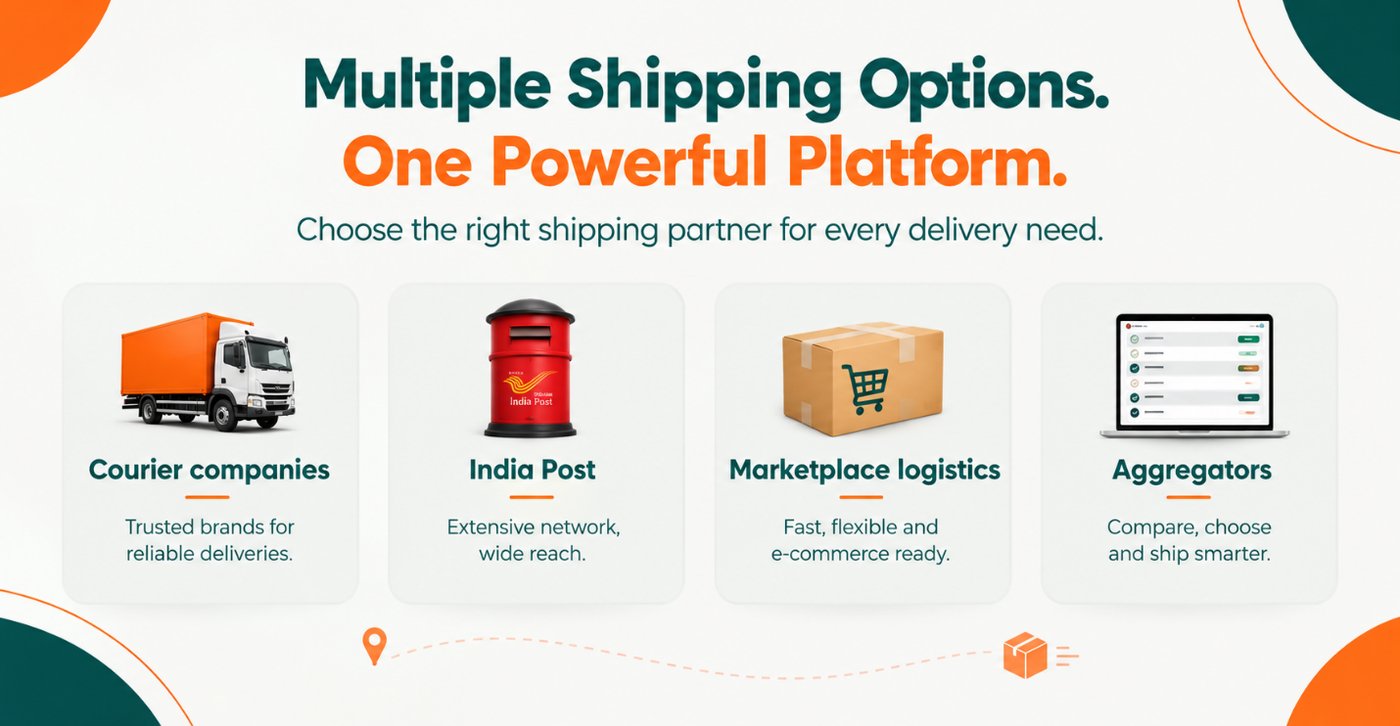
The 4 Types of Courier Options in India
Many lists mix these four together as if they were all the same. They are not. Courier names below are only examples, not a ranking.
| Type | What it does | Good for | Limit to know |
|---|---|---|---|
| Courier companies (examples: Delhivery, Blue Dart, DTDC, Ekart, Xpressbees) | Pick up, move and deliver your parcel on their own network | Sellers who ship regularly on routes where that company is strong | Each one is stronger in some zones than others |
| India Post | Government postal network with a very wide reach | Light parcels and far-away pincodes | Speed and tracking experience can differ from private couriers. Check before relying on it |
| Marketplace logistics (example: Amazon’s own shipping) | A shipping network run by a marketplace | Sellers using that marketplace’s fulfilment | Rules depend on the marketplace and may not cover your own website orders |
| Courier aggregators | A platform that connects you to several courier companies in one dashboard | Sellers who want to compare couriers and avoid depending on one | They do not deliver parcels themselves, so check which partners they offer |
Details can change, so check each option’s current service and terms before you rely on it.
If you are new to the aggregator model, see how a courier aggregator works for new sellers here.
“Best For” Table: Which Option Fits Which Situation
Instead of naming one winner, this table shows what to look for in each situation. Find the row that matches your business.
| Your situation | What to look for | Option that usually fits | Check before booking |
|---|---|---|---|
| You need the fastest delivery | Express service and a clear delivery promise for your route | A courier with an express option on that route | Is the delivery time guaranteed or only an estimate? |
| You ship small, light parcels cheaply | A low rate per 500g and no minimum commitment | Aggregator or a courier with a light-parcel rate | Fuel surcharge, weight slab rules, COD fee |
| Your buyers are in remote or rural pincodes | Confirmed pincode coverage, not a general claim | A courier or postal service known for wide reach | Test the exact pincodes before committing |
| Most of your orders are COD | NDR follow-up, low RTO and a fixed COD remittance schedule | A courier or aggregator with strong COD handling | Remittance days in writing, and the COD fee |
| You ship heavy or bulk parcels (B2B) | A per-kg rate card and bulk handling | A courier with a bulk or surface service | Minimum billable weight and documents needed |
| Your product is fragile or high value | Careful handling, insurance and a clear claims process | A courier that offers insured shipping | What is covered, and how long a claim takes |
| You handle many returns | Reverse pickup and a clear return rate | A courier or aggregator with reverse pickup | Reverse pickup charges and attempts allowed |
Always test on your own routes before you decide. A table can tell you what to check, but only your own parcels can tell you what works.
Why the Best Courier Changes by Route
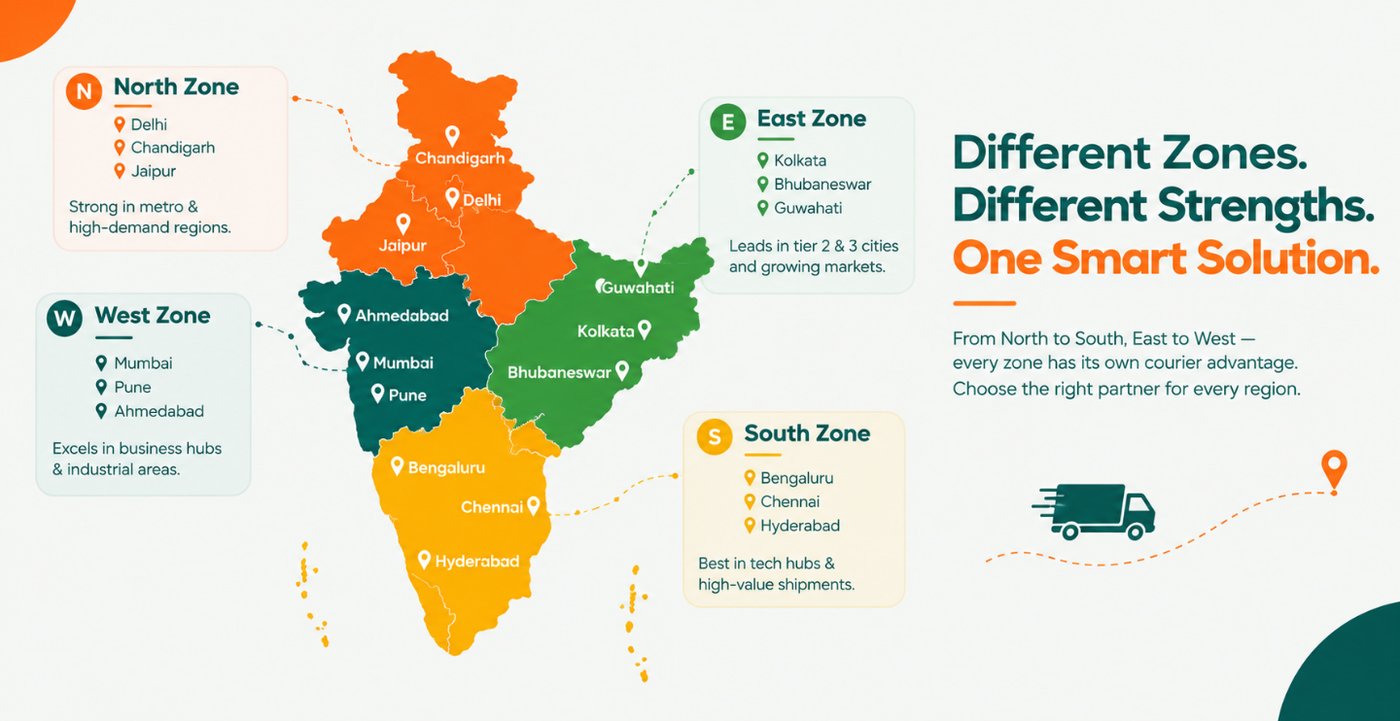
India is not one delivery market. A courier can be strong in the West and average in the North-East. Another can be the opposite. This is normal, because every courier builds its network in some regions earlier and deeper than in others.
What this means for you:
Do not judge a courier by one city. Judge it on the cities your buyers actually live in
Metro orders and remote orders can need different couriers
Hill areas, islands and far-off pincodes often take longer, whichever courier you pick
A simple first step: list your top 5 cities or pincodes by order count. Those are the routes to test, not the whole country at once.
We’ve broken down how India’s delivery zones differ here, with city and PIN code references for each zone.
“Best” Should Mean the Lowest Cost per Delivered Order
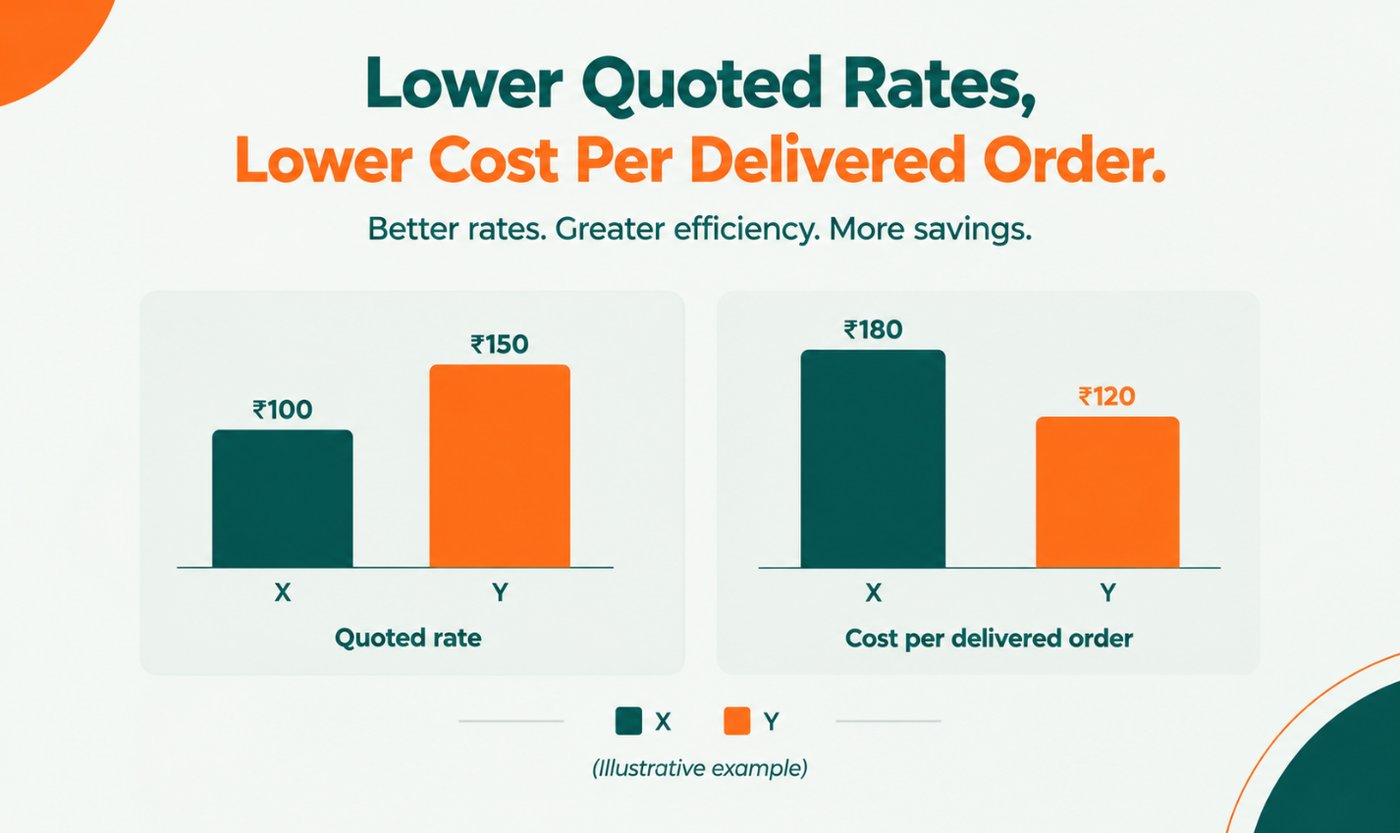
A low rate looks good on the quote. But if more parcels fail, you pay for the return and lose the sale. So compare couriers using this:
Cost per delivered order = (forward freight + surcharges + return freight) / orders delivered
Here is an example with made-up numbers. Courier X has a lower rate but a higher RTO. Courier Y costs a little more per parcel but fails less.
| Per 100 orders shipped | Courier X | Courier Y |
|---|---|---|
| Rate per parcel | ₹50 | ₹58 |
| Forward freight (rate x 100) | ₹5,000 | ₹5,800 |
| RTO rate | 25% | 10% |
| Return freight ( 60 x returned orders)₹ | ₹1,500 | ₹600 |
| Total shipping spend | ₹6,500 | ₹6,400 |
| Orders delivered | 75 | 90 |
| Cost per delivered order | about 87₹ | about 71₹ |
This example is illustrative and does not include surcharges or the cost of the lost product. Real numbers will differ.
Courier X looks cheaper on the quote. But after returns, Courier Y costs less for every parcel that actually reaches a customer. Now fill in your own numbers:
| Your numbers | Courier 1 | Courier 2 |
|---|---|---|
| Rate per parcel (with surcharges) | ||
| COD fee per delivered COD order | ||
| RTO % | ||
| Return freight per RTO order | ||
| Orders delivered out of 100 | ||
| Cost per delivered order |
We’ve covered these hidden courier charges in detail here, including fuel surcharge and weight rules.
Find Your Own “Best” With a 20-30 Shipment Test
You do not need a huge pilot. A small test on your real routes tells you more than any ranking. Here is a simple way to do it:
List your top 5 cities or pincodes by order count.
Pick two or three couriers or an aggregator that offers them.
Send 20 to 30 real orders in total, split across the couriers, with similar parcels and packaging.
Track three things only: delivery time, failed deliveries or RTO, and how fast support replies.
Write the results in a table and compare cost per delivered order.
| Courier | Shipments sent | Delivered on time | Failed or RTO | Support reply time |
|---|---|---|---|---|
| Courier 1 | ||||
| Courier 2 | ||||
| Courier 3 (optional) |
If your volume is very low, even 10 to 15 shipments will show you the pattern. Do not make a decision based on one or two parcels.
Our full courier evaluation checklist is here if you want a longer list of questions to ask.
What to Look For, by Seller Type
New seller with low volume
No minimum monthly commitment
Easy onboarding without heavy paperwork
Clear COD support
COD-heavy D2C brand
Strong follow-up on failed deliveries (NDR)
A fixed COD remittance schedule, in writing
A willingness to share RTO data for your zones
B2B or bulk shipper
A per-kg rate card, not a small-parcel rate
Bulk handling and the right documents
Clear minimum billable weight Fragile or high-value products
Careful handling and packaging standards
Insurance and a clear claims process
Meesho or Amazon seller shipping outside the marketplace
A separate shipping option for your own website or social media orders
Easy comparison, since you do not control the marketplace’s own courier
One Main Courier Plus a Backup
Many sellers do well with one main courier and one backup. If your main courier slows down in a zone, strikes, or gets overloaded in a festive sale, you can move those parcels to the backup.
One courier can be enough if you ship very little, to one tight area. As soon as your buyers spread out, a single courier becomes a risk.
This is where an aggregator makes things easier. Courier Uncle gives you access to 17+ courier partners, including Blue Dart, Delhivery and Shadowfax, in one dashboard, with same-day pickup, no hidden fees and no minimum commitment. You can compare and book per shipment without opening a separate account with each courier.
We’ve covered this decision in full depth here, including a real before-and-after example.
A Real Example: The Seller Who Stopped Using “The Famous Courier” for Everything
This is an illustrative example, based on a common pattern.
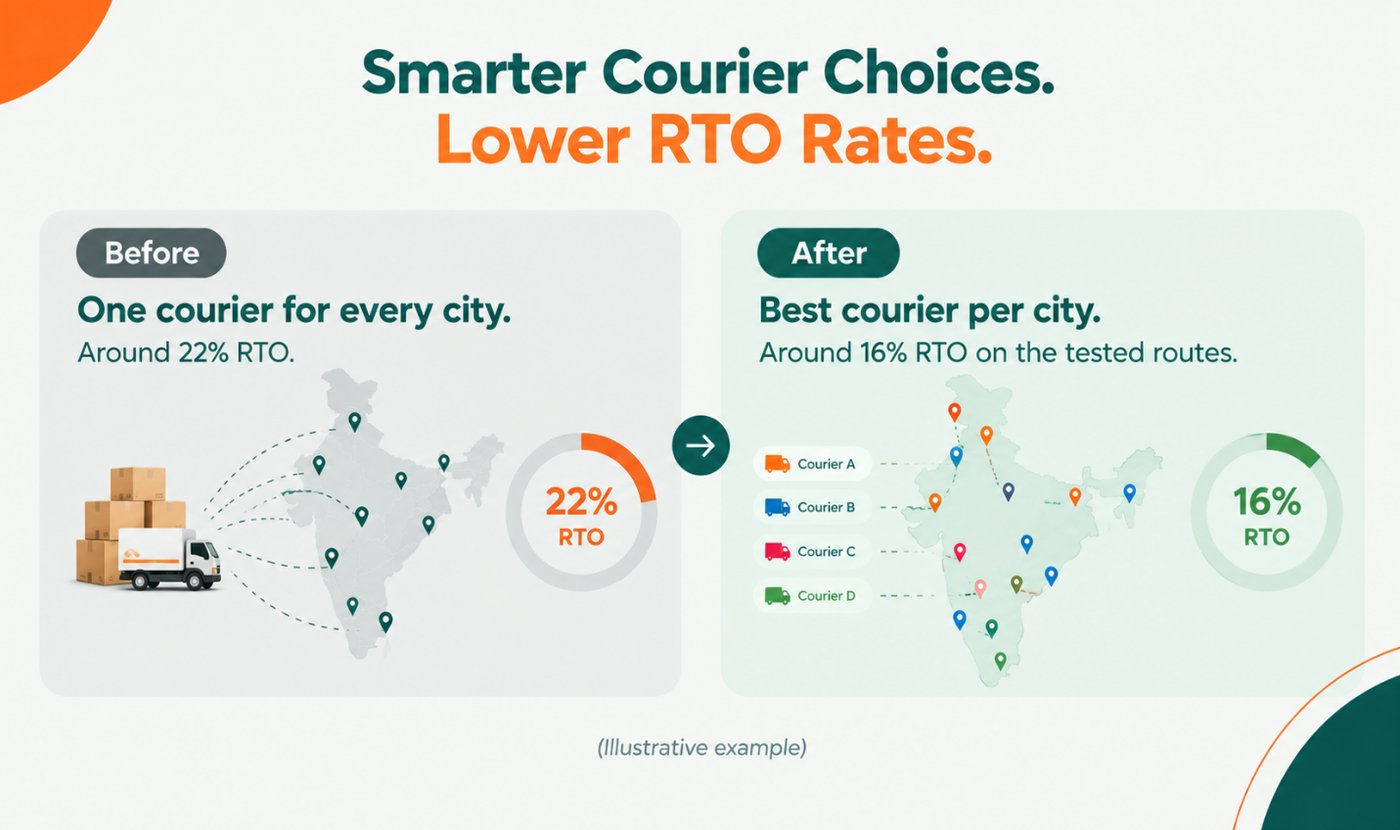
A D2C seller in Chennai sent every parcel through the most famous courier, because everyone said it was the best. Her overall RTO was around 22%, and she assumed that was just normal.
She decided to test. She picked her top five delivery cities and sent about 25 parcels across two couriers, tracking delivery time, failed deliveries and support replies. In two of those cities, the second courier delivered faster and failed less often. In the rest, her usual courier was still the better one.
She split her orders: each city went to the courier that did better there. On those two cities, her RTO came down from around 22% to around 16%, and she had fewer “where is my order” messages.
The “famous” courier was not bad. It was just not the best for every route.
Frequently Asked Questions
Which is the best courier service in India?
There is no single best courier for everyone. The best one depends on what you ship, where you ship it and whether the order is COD. Test two or three options on your own routes and compare cost per delivered order.
Which courier is best for small businesses and online sellers?
Look for no minimum commitment, easy onboarding, clear COD terms and good coverage in your buyers’ cities. Many small sellers use an aggregator so they can compare several couriers without opening multiple accounts.
Which courier is cheapest in India?
It changes by route, weight and surcharges. The cheapest quote is not always the cheapest outcome, so compare the cost per delivered order, not just the rate.
Which courier is best for COD orders?
Look for good follow-up on failed deliveries, a low RTO and a fixed COD remittance schedule. Ask for the remittance days in writing, and test on your own pincodes.
Which courier is best for remote or Tier 2 and Tier 3 areas?
Choose a courier with confirmed coverage for the exact pincodes you ship to, and test a few parcels first. India Post is known for its wide reach, but check its current speed and tracking for your routes.
What is the difference between a courier company and a courier aggregator?
A courier company delivers your parcel on its own network. An aggregator is a platform that connects you to several courier companies through one dashboard, so you can compare and book across them.
Can I use more than one courier?
Yes, and many sellers do. A main courier plus a backup protects you if one slows down or gets overloaded.
I just want to send one parcel from home. What should I do?
Compare a few options for your pickup and delivery pincodes, check the full price including any extra charges, and keep your parcel packed and sealed before the pickup.
The Bottom Line
The best courier service in India is not one name. It is the one that gives you the lowest cost per delivered order on your own routes. Test on your real pincodes, look at the total cost and keep a backup ready.
A small test and a simple table will tell you more than any ranking list.
Want to compare couriers for your own routes in one place? Check Courier Uncle — free sign-up, no minimum commitment.
Note: Courier names in this article are examples only and are not a ranking. The cost example and the case study are illustrative. Rates, services and policies change, so please verify current details before you decide.
Ship smarter with Courier Uncle
Compare live rates across multiple couriers on your actual routes — sign-up is free, no volume commitment.
Compare rates free →