
Can I Open a Courier Package Before Paying COD? What Buyers and Sellers Should Know
5 November 2026 · 11 min read · by Courier Uncle team
Can I Open a Courier Package Before
Paying COD? What Buyers and Sellers Should Know
The delivery agent is at your door. He has a parcel in his hand and he is asking for the COD amount. You are wondering: can I open it first and see what is inside?
It is a fair question, and it comes up in every city, from Mumbai and Bangalore to Delhi NCR, Noida and Chennai. Sellers ask it too, from the other side: should I let my customer open the parcel before paying?
There is no single answer, because it depends on the seller, the courier and the platform. This guide explains what “open delivery” means, what buyers can check at the door, and how sellers can decide. It also shows how to build trust without it.
The Quick Answer: Can You Open a COD Parcel Before Paying?
Sometimes yes, and often no. Some orders offer open delivery. Many do not. It depends on the seller’s policy, the courier’s delivery terms and, for marketplace orders, the platform’s rules.
So the safest habit is to check before you order, not at the door. Read the product page and the return policy to see what is offered.
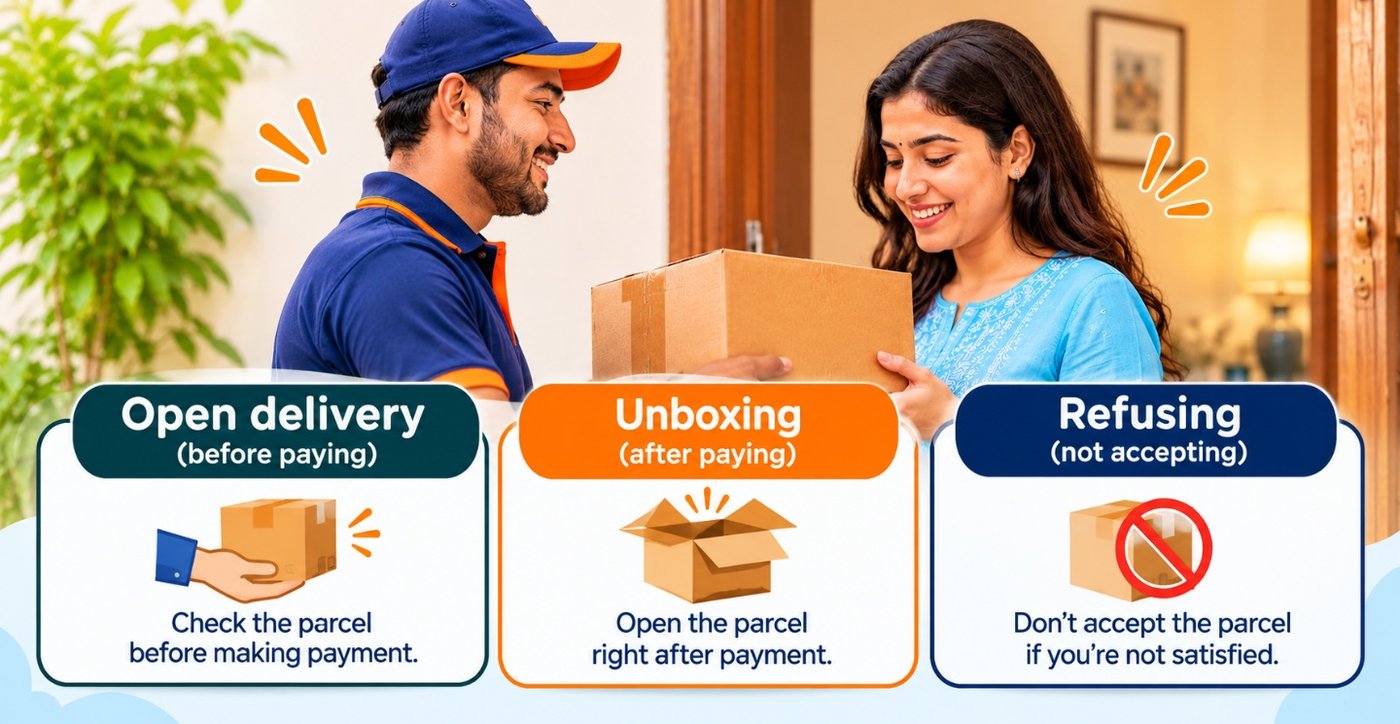
Before we go further, it helps to separate three things that people often mix up.
| Term | What it usually means | What to ask |
|---|---|---|
| Open delivery | You are allowed to open the parcel and look at the product at the time of delivery, before you pay. Only some sellers or platforms offer it. | Is open delivery available on this order? |
| Unboxing | Opening the parcel after you have paid and taken delivery, usually while recording a video as proof. | Does the seller’s return policy need an unboxing video? |
| Refusing the parcel | Not accepting the parcel at the door. It usually goes back to the seller as an RTO. | What happens to my order and refund if I refuse? |
Each one has its own rules, and none of them is guaranteed on every order. The details change by seller, courier and platform, so ask before you rely on any of them.
What Buyers Can Check at the Doorstep
Even when you cannot open the parcel, you can still check a few things before you pay.
The label: is your name, address and phone number correct?
The outside of the box: is it torn, wet, dented or already open?
The tape or seal: does it look cut, re-taped or tampered with?
The weight: does it feel right for what you ordered?
If open delivery is allowed on your order, also check that the product and the quantity match your order.
If opening is not allowed, take a clear photo or a short video of the outside of the box while the delivery agent is there. Be polite. Ask the agent what options are available, rather than arguing.
What to Do If the Parcel Looks Wrong or Damaged
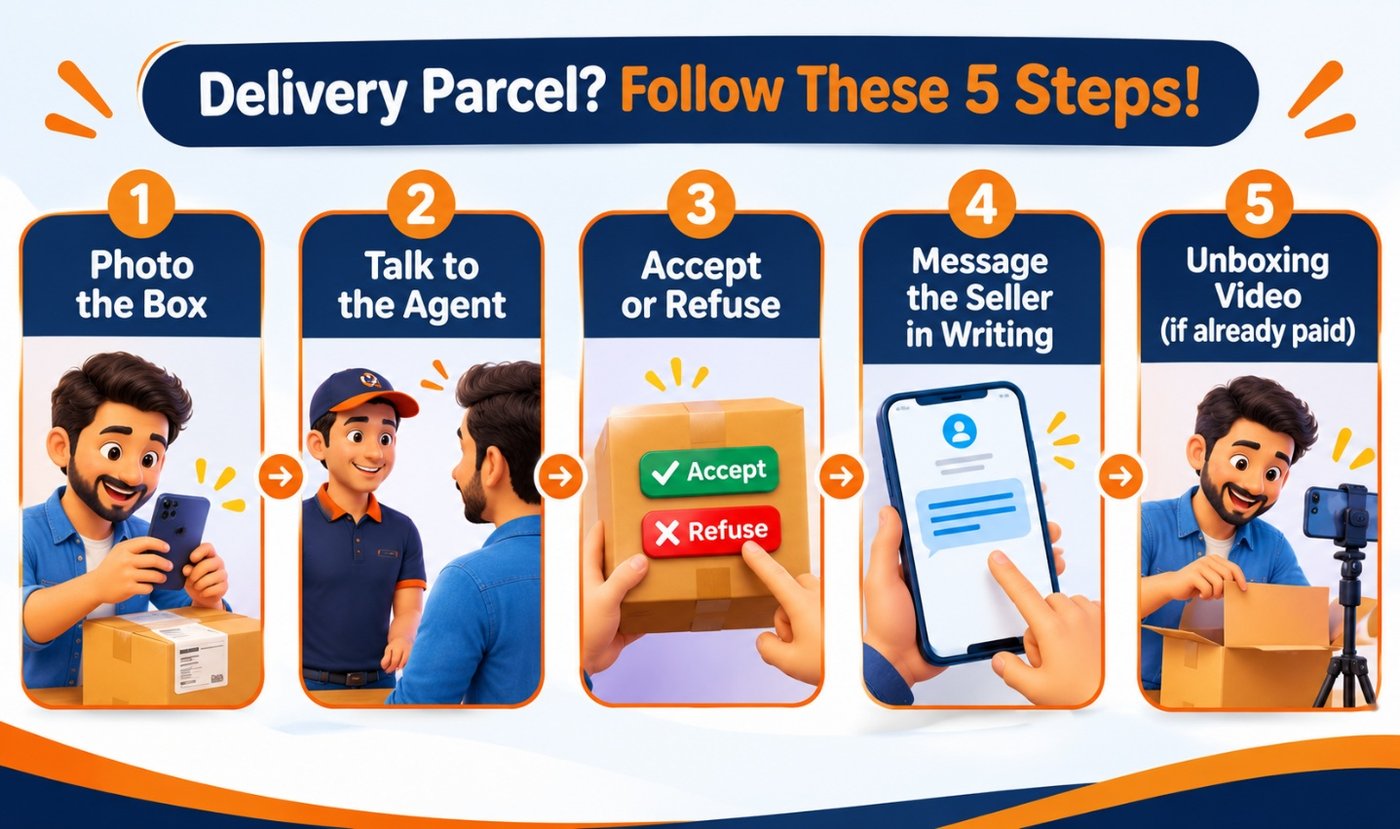
Here is a calm way to handle it:
If the box looks open, torn or tampered with, take photos or a video before you do anything else.
Tell the delivery agent what you see, and ask what the delivery terms allow.
Decide whether to accept or refuse the parcel. Refusing usually sends it back to the seller, and what happens to your order and refund then depends on the seller or platform’s policy.
Message the seller or the platform in writing, with your photos or video, as soon as you can.
If you already paid and opened the parcel later, record an unboxing video and complain in writing with proof. For a high-value or serious dispute, speak to a legal advisor about your options. This guide cannot tell you which rights or remedies apply to your case.
The documents and proof checklist we’ve covered here is useful for this as well, even though that guide is about lost parcels.
Why the Answer Changes From Order to Order
Several parties decide what happens at the door, and each one controls something different.
| Who decides | What they control | What to check |
|---|---|---|
| The seller | Whether open delivery or a similar option is offered, and the return policy | The product page and the order confirmation |
| The courier | What the delivery agent is allowed to do at the door | The delivery terms of the courier on your order |
| The marketplace | Its own rules for returns, refusals and delivery checks on marketplace orders | The platform’s current policy and your order page |
| You, the buyer | Reading the policy before you order | The return policy, before you click buy |
A good habit for buyers: read the return policy before you order, not on delivery day.
For Sellers: Should You Offer Open Delivery?
If you sell COD, this is a real decision. There are good reasons on both sides.
The upside: buyers trust you more, and “this is not what I ordered” complaints may come down. The downside: more parcels may be refused at the door, which means RTO. Some buyers may also misuse the option to “try and return” products.
Here is a simple way to decide:
| Factor | Leans towards offering open delivery | Leans towards not offering it |
|---|---|---|
| Order value | Higher value, where the buyer needs reassurance | Lower value, where the risk is small anyway |
| Category | Products where “this is not what I ordered” complaints are common | Standard, sealed or hygiene products that cannot be reused |
| Buyer history | A repeat buyer with a good record | A new buyer, or a pincode with many refusals |
| Margin | You can absorb some refusals | Every returned parcel hurts your margin |
| Your proof | You have little other proof of what you sent | You already send packing videos and clear photos |
There is no rule that fits every seller. Test it on a small group of orders, track what happens, and then decide.
We’ve covered how refusals turn into RTO and cost you money here, and the full COD vs prepaid decision is here.
Build Trust Without Open Delivery
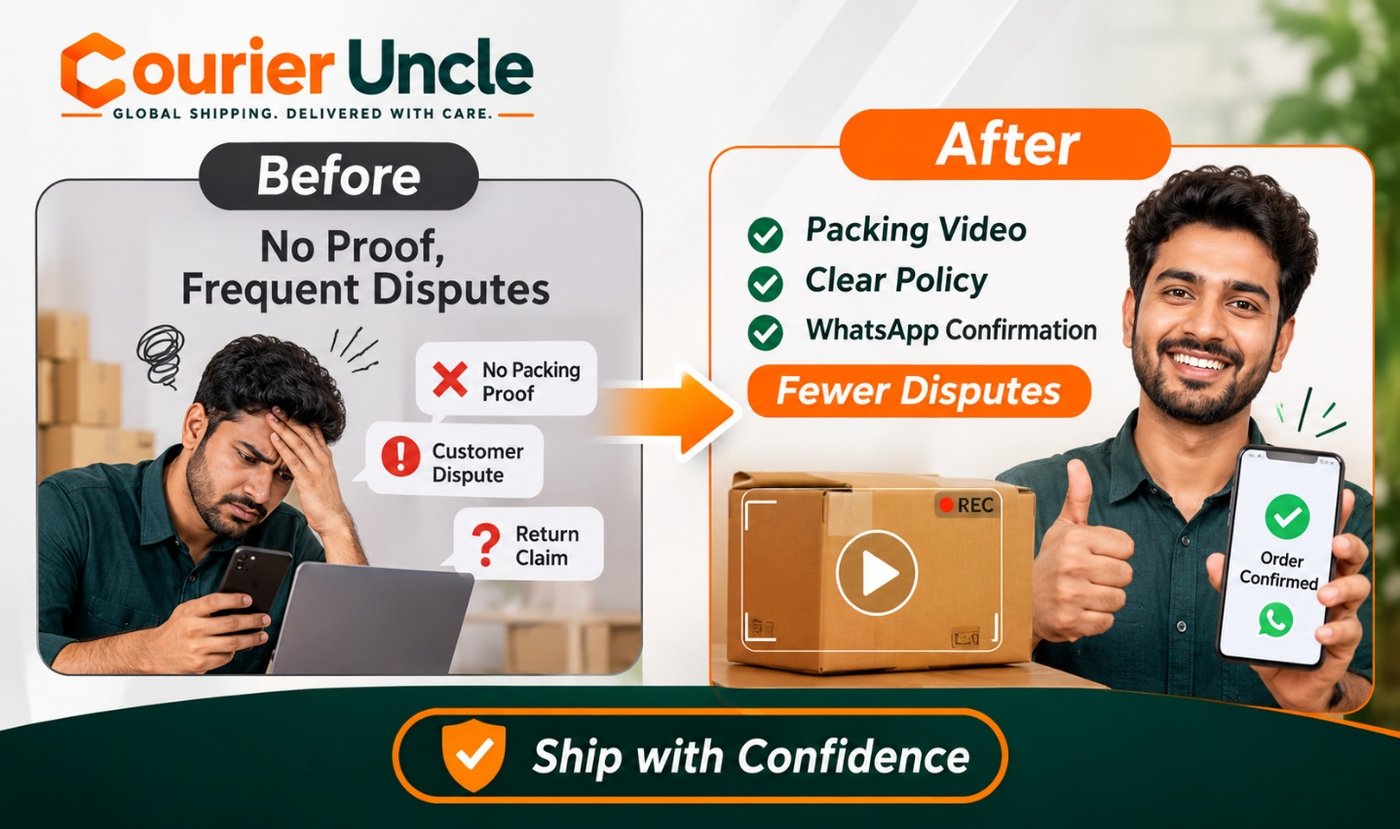
You do not need open delivery to make a buyer feel safe. Many sellers build trust in other ways:
Take a photo of the product and a short packing video before dispatch
Write a clear, simple return or replacement policy on the product page
Send an order confirmation and tracking updates on WhatsApp
Offer a small discount for paying online, or ask for a small advance on high-value orders
Pack the parcel properly and seal it, so any tampering is easy to see
Show real photos and honest reviews on your page
We’ve written about how the delivery experience affects repeat customers here, and about COD mistakes sellers make here.
How This Connects to RTO and Your Margin
When a buyer refuses a parcel at the door, it comes back to you as RTO. You pay for the way there and the way back, and you lose the sale.
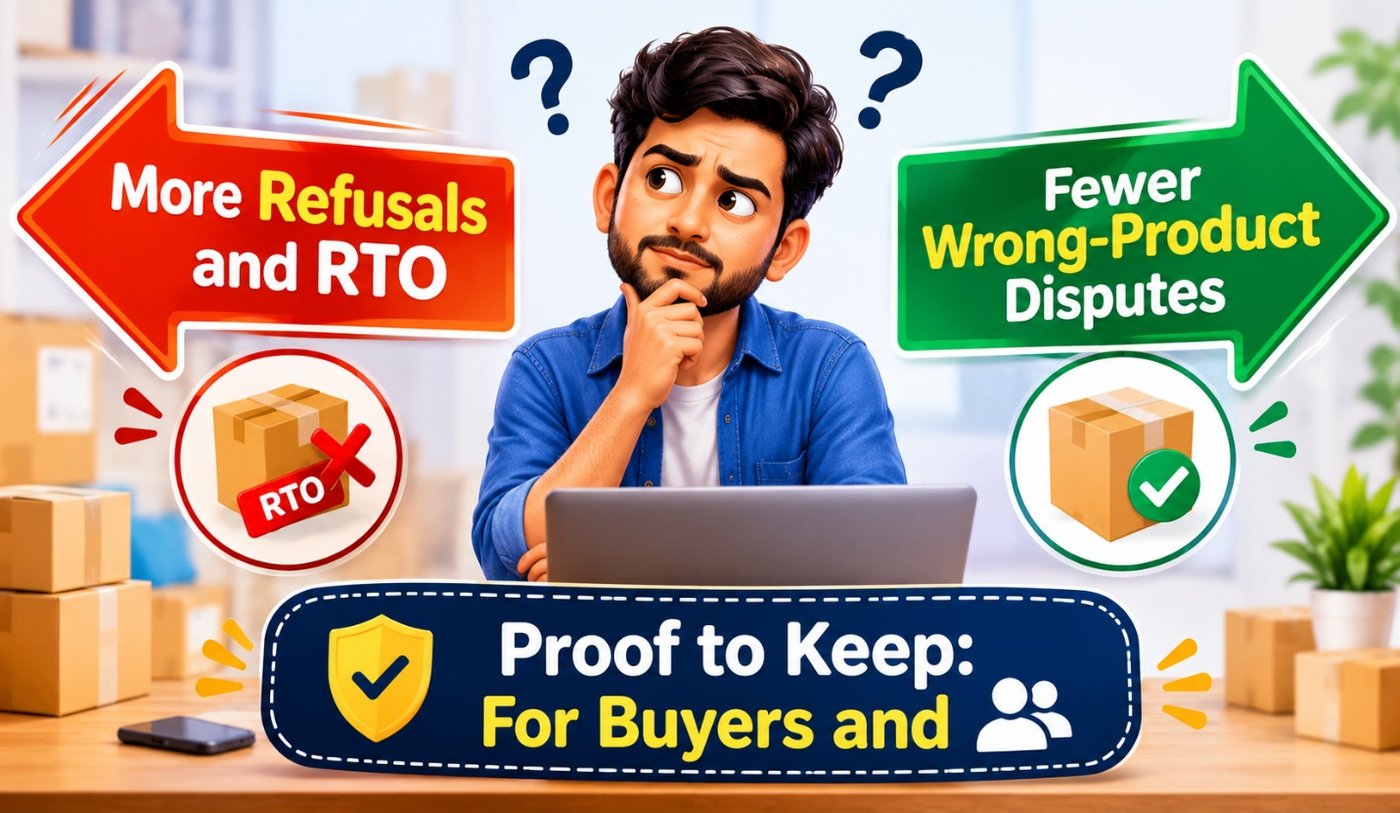
Open delivery can push refusals up, but it can also cut disputes about wrong or fake products. These two effects pull in opposite directions, so you need to look at your own numbers.
A simple habit: keep a list of every refused or disputed parcel and write down the reason. After a few weeks, you will see whether most of your problems come from refusals or from product complaints. That tells you what to fix first.
Proof to Keep: For Buyers and Sellers
In any dispute, proof helps the most. Here is what each side should keep.
| Who | Keep this | Why |
|---|---|---|
| Buyer | Photo of the label, the outside of the box, and an | Helps if the product is wrong or damaged |
| unboxing video | ||
| Buyer | Order screenshot and the seller’s return policy | Shows what was promised when you ordered |
| Seller | A short packing video, weight and size, and a photo before dispatch | Shows what was sent and how it was packed |
| Seller | Invoice and tracking history | Supports your side in a dispute |
If You Sell on Meesho or Amazon
Marketplace orders have their own rules for returns, refusals and delivery checks. Do not assume your normal D2C habits apply.
Check your seller dashboard and the platform’s current policy before you decide anything. Rules change, so verify them directly with the platform.
A Real Example: A Seller Who Cut “Wrong Product” Disputes Without Open Delivery
This is an illustrative example, based on a common situation.
A home décor seller in Chennai sold mostly COD orders. Every few weeks, a buyer would complain that the product was wrong or damaged, and the seller had no way to prove what she had actually sent.
She did not start offering open delivery. Instead, she made three changes. She began taking a short packing video and a photo before every dispatch. She wrote a clear return policy on each product page. And she started confirming COD orders on WhatsApp before dispatch.
Complaints and refusals came down over the next few months. And when a dispute did come, she could show exactly what she had sent. She did not need to give buyers the right to open the parcel at the door to build trust.
The lesson: open delivery is one way to build trust, but it is not the only one.
Quick Self-Check for Sellers
Answer these honestly. Each “No” is something to fix this week.
| Question | Yes | No |
|---|---|---|
| My return and delivery policy is clearly written on my product pages | ||
| I take a packing photo or video before I dispatch | ||
| I know the main reasons my customers refuse parcels | ||
| I confirm high-value COD orders before dispatch | ||
| I know the delivery terms of my courier or platform |
Frequently Asked Questions
Can I open a COD parcel before paying?
Sometimes, but not always. It depends on the seller, the courier and the platform. Check the product page and return policy before you order, because rules at the door can differ.
What if the delivery agent does not allow me to open the parcel?
Stay calm and ask what the delivery terms allow. You can check the outside of the box, take photos or a video, and decide whether to accept or refuse the parcel. Then contact the seller or platform in writing.
What should I do if I find a wrong or damaged product after paying?
Record an unboxing video and take photos right away. Then contact the seller or the platform in writing, with your proof, and follow their return process.
Can I refuse a COD parcel?
In practice, many buyers do. The parcel then usually goes back to the seller as an RTO. What happens to your order and refund depends on the seller or platform’s policy, so check it first.
What is the difference between open delivery and normal COD?
With open delivery, you may be allowed to open the parcel and look at the product before you pay. With normal COD, you usually pay on delivery and look at the product afterwards. Only some sellers offer open delivery.
Should sellers offer open delivery on COD orders?
It depends on your product, your order value and your margin. It can build trust, but it can also increase refusals. Test it on a small group of orders and track the results before you decide.
How can a seller prove the right product was sent?
Take a short packing video and a photo before dispatch, keep your invoice, and record the weight and size. Keep these together with the tracking history.
Do I need to make an unboxing video?
It is not always required, but it is a good habit, especially for high-value orders. A short, clear video helps if the product turns out to be wrong or damaged.
The Bottom Line
The answer to “can I open a courier package before paying COD?” is not one word. Buyers should read the policy before they order. Sellers should build trust in more than one way, and not depend only on open delivery.
If you ship COD orders, it also helps to compare couriers and ask each one about its delivery terms before you book. Courier Uncle gives you access to 17+ courier partners, including Blue Dart, Delhivery and Shadowfax, in one dashboard, with same-day pickup, no hidden fees and no minimum commitment. Ask each partner about its delivery terms before you start.
Want to compare couriers and routes before you book? Check Courier Uncle — free sign-up, no minimum commitment.
Note: Open delivery, refusal and return rules differ by seller, courier and platform, and they change. The case study is illustrative. This article is general guidance and not legal advice. Please check the current policy for your order, and speak to a legal advisor for serious disputes.
Ship smarter with Courier Uncle
Compare live rates across multiple couriers on your actual routes — sign-up is free, no volume commitment.
Compare rates free →