
Multi-Piece Shipments: How Weight Is Billed Across Boxes
9 September 2026 · 5 min read · by Courier Uncle team
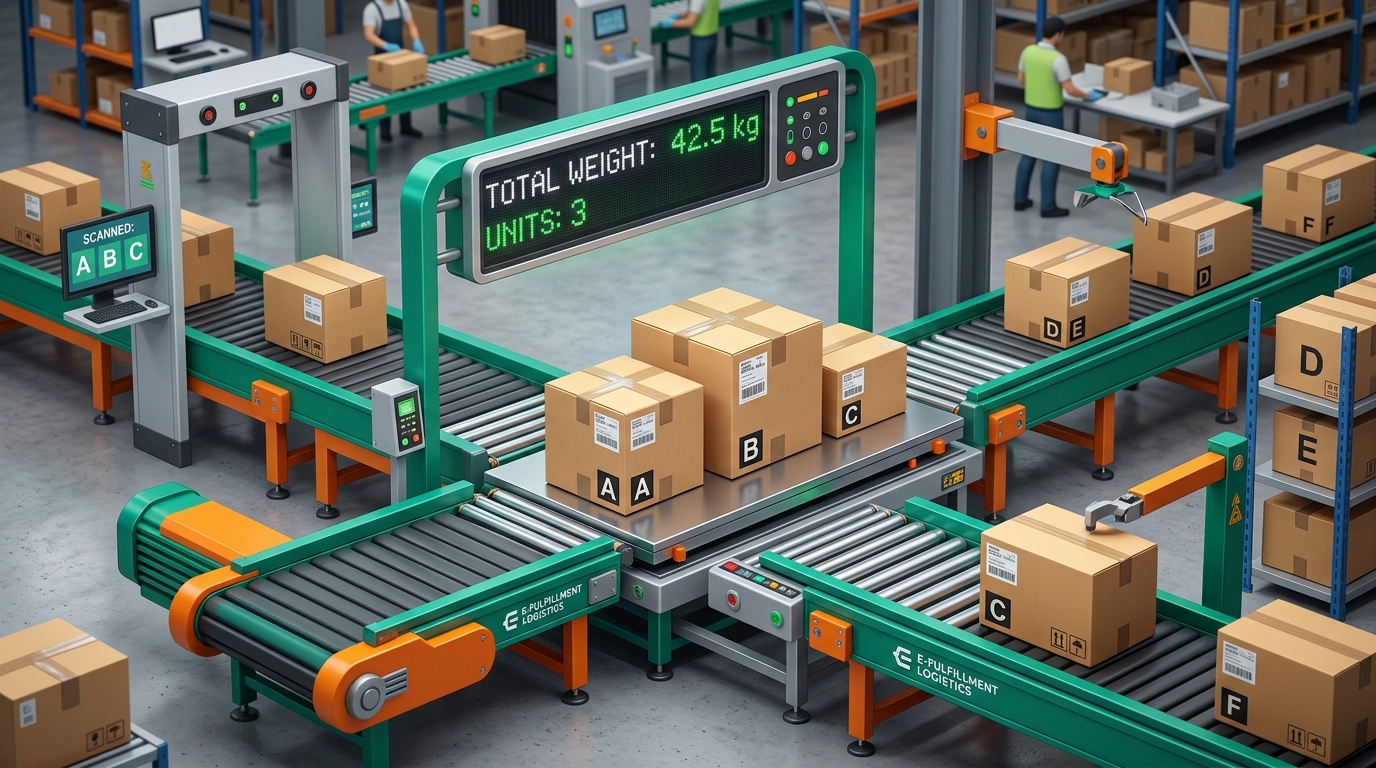
One order, three boxes. Do you pay for one shipment of 6 kg, or three shipments of 2 kg? Depending on how you book it, either, and the difference on a Zone D lane is over Rs 100. Multi-piece orders are where the slab system and the per-parcel structure of courier pricing interact in ways that are easy to get wrong.
Two ways a multi-box order can be billed
As separate shipments. Each box gets its own AWB, is weighed and billed on its own chargeable weight, and travels independently. Three boxes of 2 kg on a Zone D card: 3 x Rs 146 = Rs 438. Each box also carries its own COD fee if COD.
As a multi-piece consignment (MPS). One AWB with several piece labels. The courier bills the total chargeable weight as one shipment. 6 kg on the same card: Rs 210 for the first 5 kg plus Rs 36 for the sixth, Rs 246. One COD fee. The pieces travel together and are delivered together.
Rs 438 against Rs 246 for the same three boxes. Multi-piece exists because heavier slabs are cheaper per kilogram than lighter ones, and one consignment pays the lighter-slab premium once instead of three times.
When multi-piece is available
Not every courier and not every service. Some domestic B2C parcel services support MPS up to a piece count and a total weight; B2B and heavy freight services are built around it. On Courier Uncle, a parcel booking is one AWB per box today. Multi-box consignments are handled through the B2B desk, where the carriers’ multi-piece and part-truckload products apply and the consolidated rate is quoted on the total weight. For parcel bookings, the practical version of this article is: get the order into one box wherever you can.
How the chargeable weight is computed
Per piece, then summed. Each box’s chargeable weight is the higher of its dead weight and its volumetric weight; the consignment’s chargeable weight is the sum of the pieces. So a consignment of one dense 3 kg box and one bulky 0.5 kg box that measures 2 kg volumetric is billed at 5 kg, not 3.5 kg.
This is the trap: the bulky piece’s volumetric weight is not offset by the dense piece’s headroom. Right-size every box in the consignment, not just the heaviest.
When separate shipments are actually better
Two situations.
Very different destinations for the pieces. Obvious, but it happens with split orders: the pieces are going to two addresses, and that is two shipments.
One piece is ready and one is not. Holding a ready box for two days to consolidate costs a delivery promise. Ship the ready one; the second travels alone. The extra freight is the price of speed, and often worth it.
Otherwise, consolidate.
COD on multi-piece
One AWB means one COD collection and one COD fee, on the full order value. The rider collects the whole amount on delivery of all pieces. If a piece is lost in transit, the courier delivers what arrived and the collection is for the full amount unless the order is amended; this is the operational reason to keep pieces together and to label each with “piece 1 of 3”.
Labelling
Each piece needs its own label carrying the consignment AWB and the piece number, which the carrier’s MPS product issues. Put the piece labels on the pieces they describe; a hub that scans “piece 2 of 3” on a box that is actually piece 3 will flag a mismatch, and mismatches slow the whole consignment.
Worked comparison
A furniture accessories seller ships a set: one 4 kg box of hardware (dense, 30 x 25 x 15 cm, volumetric 2.25 kg, chargeable 4 kg), one 1.2 kg box of fabric (40 x 35 x 20 cm, volumetric 5.6 kg, chargeable 5.6 kg). Zone C card as in the earlier tables.
| Booking | Chargeable | Rate |
|---|---|---|
| Separate: hardware | 4 kg, 3 to 5 kg slab | Rs 210 |
| Separate: fabric | 5.6 kg, 5 kg plus 1 | Rs 246 |
| Separate total | Rs 456 | |
| MPS | 9.6 kg, 5 kg plus 5 | Rs 390 |
| MPS with fabric vacuum-packed (30 x 25 x 10, 1.5 kg vol) | 5.5 kg, 5 kg plus 1 | Rs 246 |
Consolidating saved Rs 66. Fixing the bulky piece saved another Rs 144. The second move was worth more than the first.

Frequently asked questions
Is multi-piece cheaper for two small boxes?
Usually, yes, because two 0.5 kg parcels cost two first-slab rates and one 1 kg consignment costs one second-slab rate, which is less than double. Quote both ways in the calculator; the answer is on the screen.
Can I add a piece after booking?
Not to an existing consignment. Book the extra piece as its own shipment, or cancel and re-book the consignment if nothing has been picked up yet.
What if one piece is delivered and one is lost?
The courier raises the loss on the consignment; the platform handles the claim for the missing piece and, on COD, the collection is adjusted. Label each piece clearly so partial deliveries are identified at the door.
Can I book a multi-piece consignment on Courier Uncle?
Parcel bookings are one AWB per box. For a genuine multi-box consignment, use the B2B desk from the dashboard; it quotes the carriers’ multi-piece and part-truckload products on the total weight. For two or three small boxes, the cheaper answer is usually one right-sized box.
Does volumetric weight apply per piece or to the consignment as a whole?
Per piece, then summed. A consignment’s chargeable weight is the sum of each piece’s chargeable weight, which is why one bulky piece can dominate.
Is there a maximum number of pieces?
Yes, and it varies by courier and service. Domestic parcel services typically allow up to 5 to 10 pieces and 25 to 50 kg total. Beyond that, B2B services apply.
Ship smarter with Courier Uncle
Quote the boxes as separate parcels in the rate calculator, then quote the same goods in one box. See the difference before you print the labels.
Ship smarter with Courier Uncle
Compare live rates across multiple couriers on your actual routes — sign-up is free, no volume commitment.
Compare rates free →