
Prepaid vs COD: The Real Cost Difference Per Order
9 September 2026 · 5 min read · by Courier Uncle team
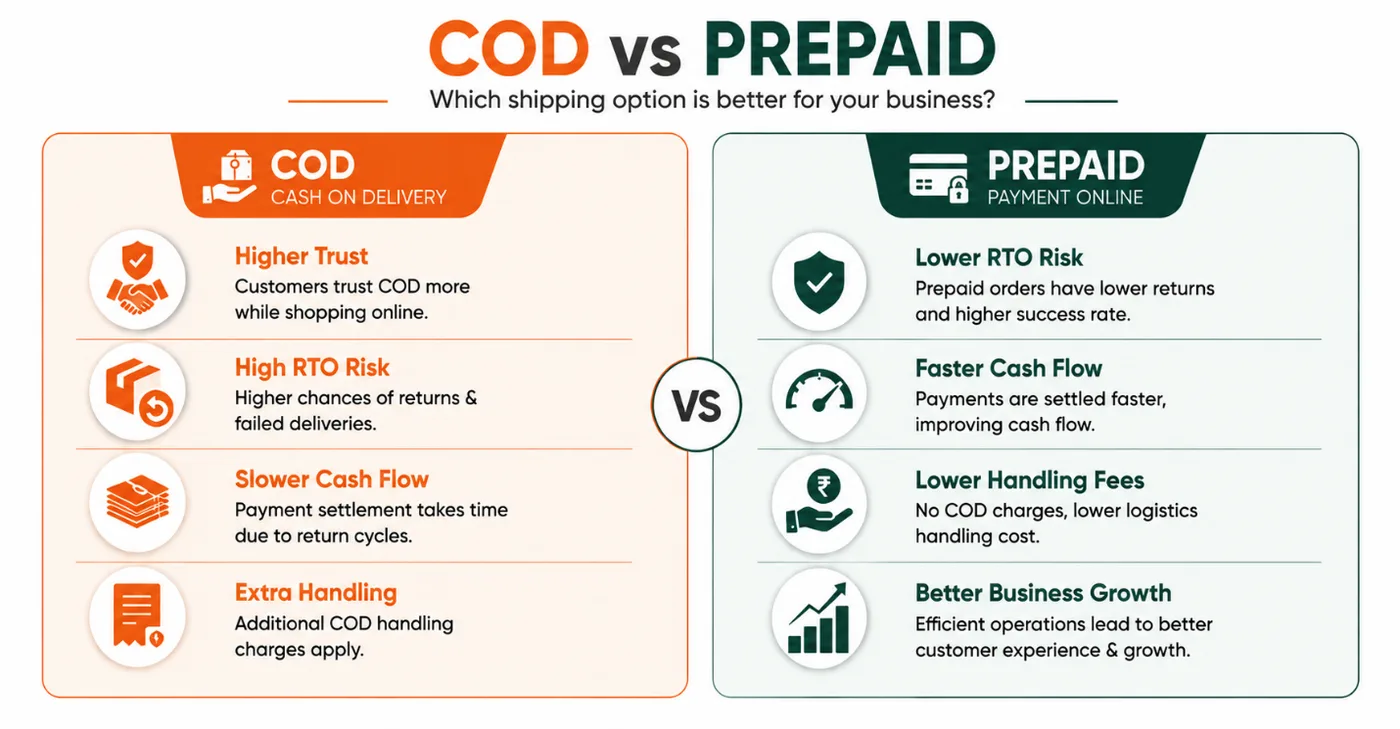
Cash on delivery drives conversion in India and everybody knows it. What fewer sellers have measured is what it costs them per order, all-in, against prepaid. The difference is bigger than the COD fee, and once you have the number, the decisions about thresholds, incentives and which lanes to offer COD on make themselves.
The visible cost: the COD fee
Every card charges a collection fee on COD orders: the higher of a flat amount and a percentage of the order value. On a representative Rs 30 or 1.8 percent card:
| Order value | Flat | 1.8 percent | Fee charged |
|---|---|---|---|
| Rs 499 | Rs 30 | Rs 9 | Rs 30 |
| Rs 999 | Rs 30 | Rs 18 | Rs 30 |
| Rs 1,999 | Rs 30 | Rs 36 | Rs 36 |
| Rs 4,999 | Rs 30 | Rs 90 | Rs 90 |
Plus 18 percent GST on the fee. So far, COD is Rs 35 to 106 dearer per order than prepaid. That is the part everyone counts.
The invisible cost: returns
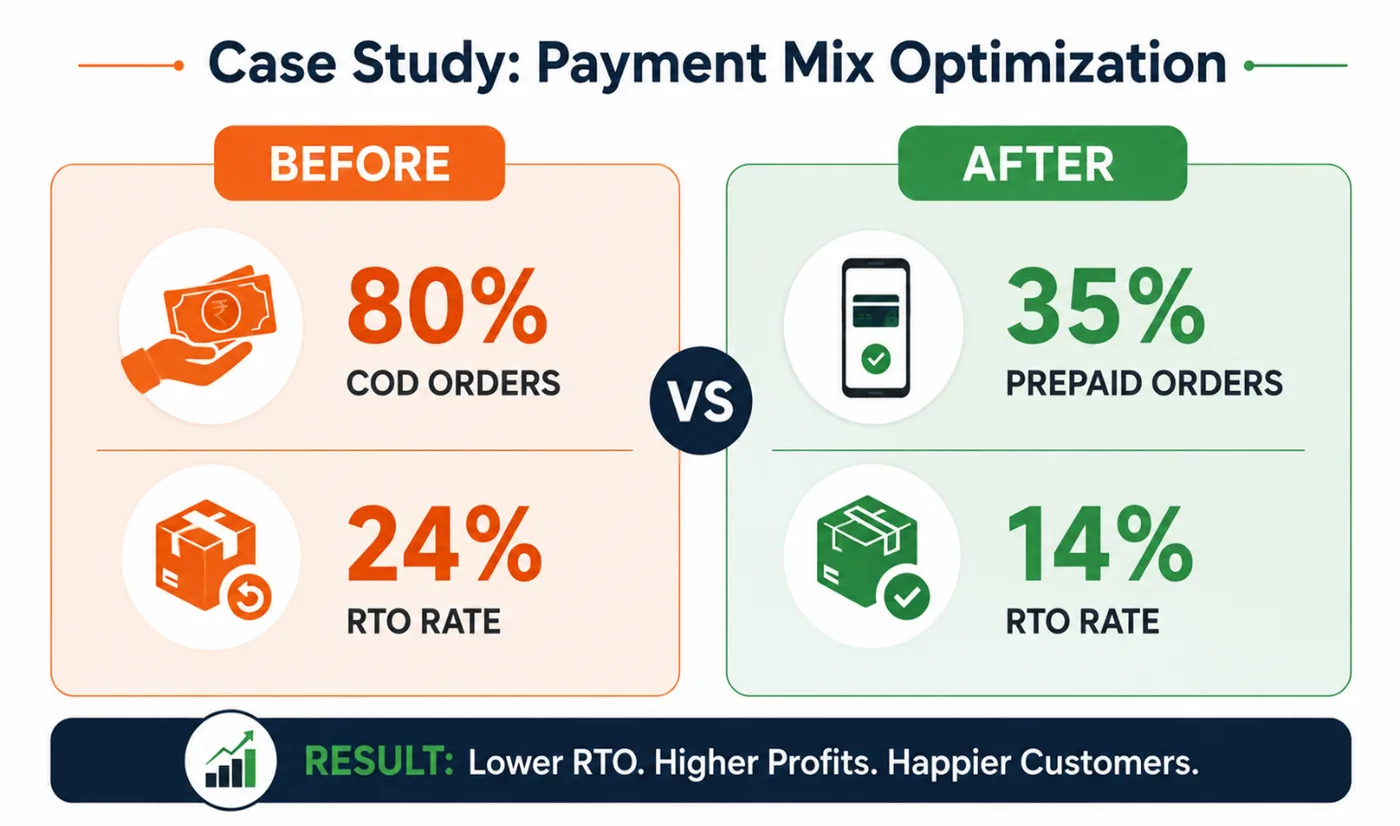
COD orders return more. Across Indian D2C sellers the RTO rate on COD typically runs two to three times the prepaid rate: 15 to 25 percent against 4 to 8 percent. The buyer was never charged, so refusing at the door costs them nothing.
A returned parcel costs the forward freight again for the return leg on most cards. On a Rs 90 Zone D shipment, an RTO is Rs 180 of freight plus GST, and no sale.
Spread across orders, the expected RTO cost per order is the RTO rate multiplied by the freight. At 20 percent RTO and Rs 90 freight, that is Rs 18 per COD order shipped, against Rs 5 per prepaid order at 6 percent RTO. Add the cost of the returned product being handled, repacked, and sometimes unsellable.
The cash cost: remittance delay
Prepaid money is in your account before you ship. COD money is collected by the courier and remitted on a cycle, typically D+2 to D+7 after delivery depending on your plan. On a Rs 999 average order and 30 COD orders a day, a five-day cycle means roughly Rs 1.5 lakh is always in transit. That is working capital you are funding, and at even 12 percent a year it is a real line.
The full comparison on one order
A Rs 1,499 order to Zone C, 0.5 kg, Rs 52 freight, Rs 30 or 1.8 percent COD card, RTO rates of 20 percent on COD and 6 percent on prepaid.
| Component | Prepaid | COD |
|---|---|---|
| Freight | Rs 52 | Rs 52 |
| COD fee | Rs 0 | Rs 30 |
| Expected RTO cost (rate x freight) | Rs 3.12 | Rs 10.40 |
| GST on the above | Rs 9.92 | Rs 16.63 |
| Working capital on Rs 1,499 for five days at 12 percent | Rs 0 | Rs 2.46 |
| Expected cost per order | Rs 65.04 | Rs 111.49 |
COD is Rs 46 dearer on this order, not Rs 30. On a Rs 4,999 order the gap is over Rs 110. That is the number to use when deciding what a prepaid discount is worth.
What sellers do with this number
Price the incentive. If COD costs Rs 46 more than prepaid, a Rs 30 prepaid discount or a “free shipping on prepaid” line is not generosity; it is arithmetic. Most sellers who offer a 3 to 5 percent prepaid incentive see the prepaid share rise from 30 percent to 50 percent or more within a quarter.
Cap COD by value and by zone. Turn COD off above an order value where the fee plus RTO risk exceeds your margin, and on Zone E pincodes where RTO rates are highest.
Confirm before shipping. A WhatsApp or IVR confirmation on COD orders cuts RTO by a third or more. The cost of the call is a fraction of one return.
Partial COD. Collect a small amount online at checkout and the rest on delivery. Buyers who have paid Rs 99 rarely refuse the parcel.
Keep COD. For many categories and many pincodes, the conversion lift from COD outweighs everything above. The point is not to abandon it; it is to offer it where it earns its cost.
Frequently asked questions
Is the COD fee charged if the parcel returns?
It depends on the card. Most charge the COD fee only on successful collection, so a returned COD parcel costs the forward and return freight but not the collection fee. Check your card’s terms.
How fast is COD remitted on Courier Uncle?
On a plan you choose: D+1, D+3 or D+7 after delivery. Faster cycles carry a slightly higher COD fee; the D+7 plan has the lowest. Each remittance lists the shipments inside it and the UTR.
Does offering COD really increase conversion that much?
For first-time buyers and outside the top metros, yes, often by 20 to 40 percent. For repeat buyers and metro pincodes, much less. Segmenting COD availability by buyer history and pincode captures most of the lift at a fraction of the cost.
What RTO rate should I expect on COD?
Fifteen to twenty-five percent is typical for D2C in India without order confirmation; eight to twelve percent with confirmation and good address validation. Anything above twenty-five percent means the checkout is letting through orders that should be filtered.
Can I charge the buyer for COD?
Yes, and many sellers add a Rs 30 to 50 “COD handling” line at checkout. It reduces COD share and covers the fee. Test it; on some categories it hurts conversion more than it saves.
Should I turn COD off completely?
Almost never. The right move is to make prepaid attractive, confirm COD orders before shipping, and restrict COD only on the lanes and values where it loses money.
Ship smarter with Courier Uncle
Quote any order both ways and see the fee difference before you decide. Compare now, and pick the COD remittance cycle that fits your cash flow.
Ship smarter with Courier Uncle
Compare live rates across multiple couriers on your actual routes — sign-up is free, no volume commitment.
Compare rates free →