
Why Your Delivery Partner Is Losing You Customers (And How to Fix It)
9 September 2026 · 9 min read · by Courier Uncle team
You’ve got good reviews. The product is solid. Your ads are converting. And yet, customers buy once and never come back — and you genuinely can’t figure out why. Here’s a question worth sitting with: when was the last time you actually looked at your delivery experience as a reason for that, instead of your product, your pricing, or your marketing?
Most sellers audit everything except this. Whether you’re running a D2C brand, reselling on Meesho, fulfilling Amazon orders, or shipping out of Mumbai, Bangalore, Delhi NCR, Noida, or Chennai — the courier who hands over that package is quietly deciding whether that customer ever buys from you again. This isn’t generic “improve your customer service” advice. It’s specifically about how delivery experience drives customers away, and what to actually do about it.
The Blind Spot Most Sellers Never Audit
For your customer, the delivery person is often the only human being they interact with from your brand — not your website, not your ad, not the note inside the box. That five-minute doorstep moment carries more weight than most sellers realise.
A bad delivery experience quietly overwrites a good product experience. The customer might genuinely love what they bought, but if it arrived late, or the tracking left them anxious for three days, or the delivery agent was rude about collecting COD payment, that’s what sticks. That’s the version of your brand they remember.
Sellers track conversion rate. They track ad ROAS. They track product reviews religiously. Almost nobody tracks whether the delivery experience made a customer want to buy again — and that’s usually the missing metric in the entire retention conversation.
Six Ways Your Delivery Partner Is Quietly Driving Customers Away
Delayed deliveries kill the moment
Excitement has a shelf life. A late delivery for a birthday gift, a festive order, or something a customer needed urgently turns a genuinely good product into a disappointment — regardless of quality. This hits hardest in impulse and occasion-driven categories like fashion, gifting, and festive-season purchases, where timing is often the entire point of the order.
Poor tracking visibility creates anxiety, not trust
Silence between “order confirmed” and “out for delivery” doesn’t feel neutral to a customer — it feels like something might be wrong. That uncertainty chips away at confidence in your brand well before the product even arrives, and it’s completely avoidable with better tracking communication.
Rude or unprofessional delivery experience
The delivery agent is your brand’s last impression, whether you like it or not. A rude interaction over COD payment, incorrect change, or an impatient, dismissive attitude at the door directly damages how the customer feels about your brand — and they’ll blame you, not the courier, because to them, the delivery person represents you.
Damaged or mishandled packages
A great product loses all its value the moment it arrives crushed, scratched, or broken. Worse, the recovery process — filing a complaint, waiting for a replacement, chasing a refund — often frustrates customers enough that they simply decide not to risk ordering again.
Failed delivery attempts with no real communication
A missed delivery with zero proactive outreach tells the customer they’re an afterthought, not a priority. This is exactly where NDR (Non-Delivery Report) handling stops being just an operational RTO problem and starts being a retention problem — we’ve covered NDR handling and its cost impact in more depth here.
Slow or unclear refund/RTO resolution
When something does go wrong, how fast and clearly it gets resolved matters almost as much as the original mistake. A slow, confusing refund process after a failed delivery often does more lasting damage to loyalty than the failed delivery itself.
The Delivery Partner Is Your Brand’s Last Impression — Not Just Logistics
Think about how much thought goes into your packaging design, your brand voice, your product photography. Now think about how much thought went into choosing your courier — was it the cheapest option, or the one that actually represents your brand well at the doorstep?
That’s the disconnect. Sellers pour effort into every touchpoint up until the point of delivery, then hand the single most emotionally charged moment of the entire customer journey to whoever happened to be cheapest. Delivery isn’t just an operational line item — it’s a brand touchpoint, arguably the most important one, because it’s the one your customer remembers when deciding whether to order again.
How to Tell If Delivery Is the Real Reason You’re Losing Customers
Before jumping to fixes, it helps to actually confirm the pattern. A few signs worth checking: • A high one-time-purchase rate despite genuinely good product reviews • Support tickets that cluster around delivery and tracking issues rather than the product itself • A visible drop in reorders from specific pincodes or through a specific courier
Here’s a simple exercise worth doing this week: pull your customer support tickets from the last month and tag each one as “delivery-related” or “product-related.” Most sellers who do this are surprised by the split — delivery complaints often outnumber product complaints by a wide margin, even when nobody was tracking it that way.
Cross-referencing repeat-purchase rate against delivery performance — on-time percentage, RTO rate, complaint volume — by courier or region usually makes the pattern obvious within a few minutes.
| What you are seeing | Likely real cause | Where to look |
|---|---|---|
| Good reviews, but low repeat orders | The delivery experience, not the product, is the letdown | Repeat-purchase rate by pincode and by courier |
| Support tickets say “where is my order” | Poor tracking visibility creating anxiety | Ticket tags: delivery versus product issues |
| Reorders drop from specific pincodes | One courier under-performing on those lanes | On-time and RTO rate by courier and zone |
| Refund requests after a failed delivery | Slow NDR handling and unclear RTO resolution | Time from NDR to resolution, by courier |
How to fix it: six moves that change the delivery experience
Choose the courier per lane, not per contract
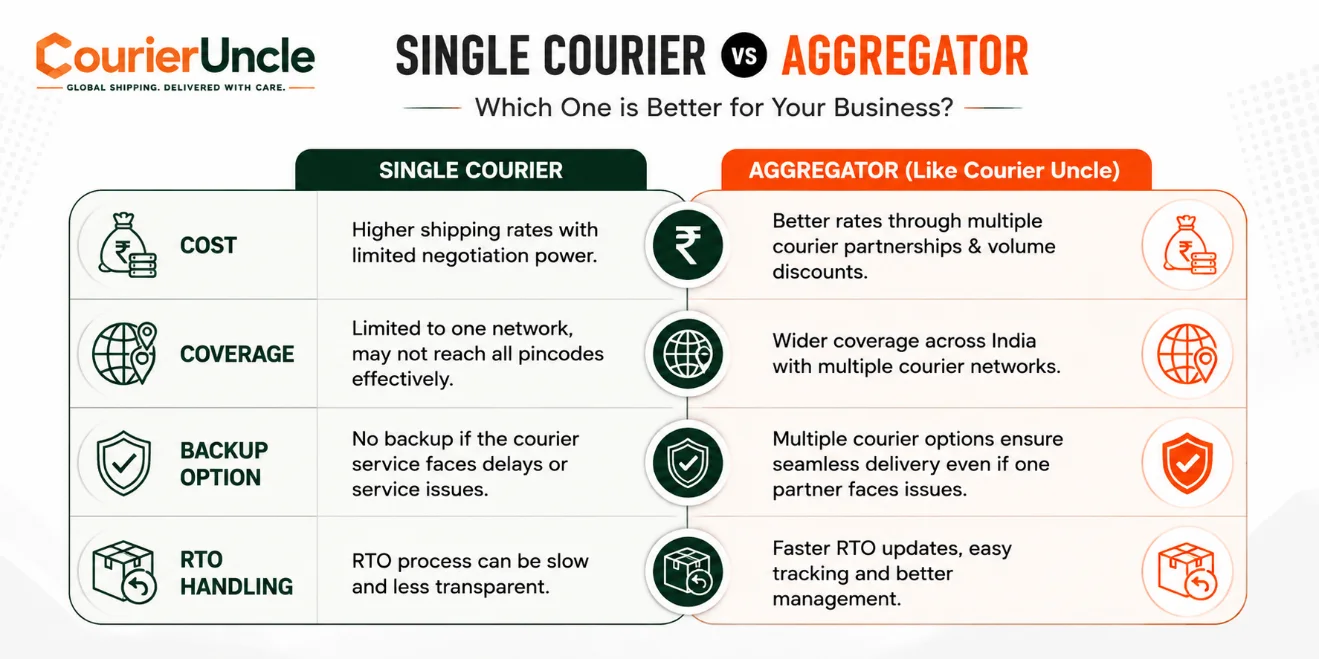
No single courier is best everywhere. One is fastest into the North East, another has the lowest RTO in Tier 2 Maharashtra, a third is cheapest within the metro. A seller locked to one courier gets that courier’s worst lanes along with its best. Compare every courier on every order and let the numbers pick. On Courier Uncle the comparison runs on each booking across all twelve carriers, and courier rules can prefer speed, cost or delivery performance by zone.
Make tracking visible before the customer asks
The gap between “order confirmed” and “out for delivery” is where anxiety lives. Push status updates by WhatsApp, SMS or email at pickup, in transit, out for delivery and delivered, with a branded tracking page the customer can open without logging in. A customer who knows where the parcel is does not raise a ticket.
Act on NDRs the same day
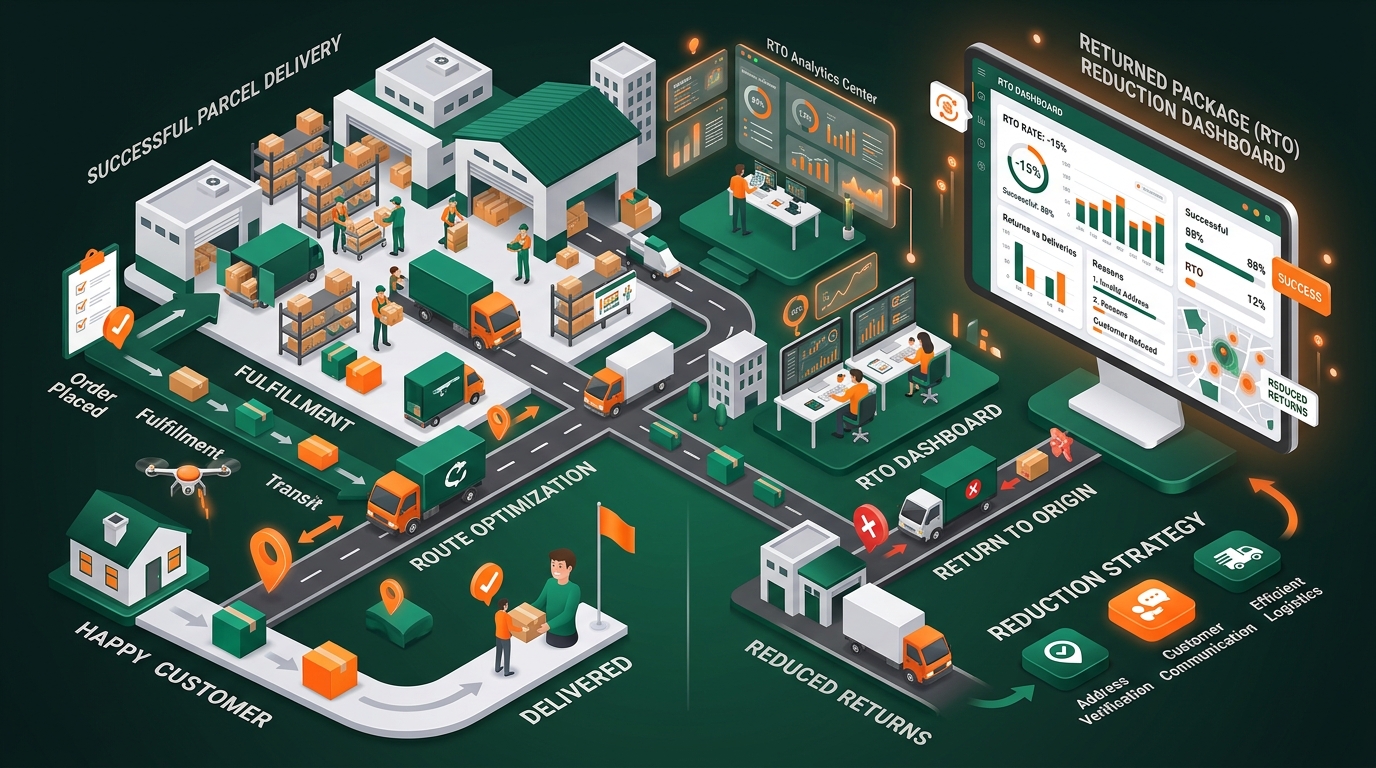
A failed delivery with no response is the fastest route to an RTO. Set up NDR alerts, call or message the customer within hours, and re-attempt with a corrected address or preferred time. Sellers who work NDRs same-day convert 40 to 60 percent of them into deliveries; sellers who wait until the courier gives up convert almost none. Automating the re-attempt for the first two attempts and escalating only the third keeps the queue short.
Confirm COD orders before they ship
Most refused parcels were never wanted. A WhatsApp confirmation on COD orders above a value threshold cuts RTO by a third or more and costs a fraction of one return. It also gives the customer a moment to correct an address before the parcel is on a truck.
Pack for the journey, not the shelf
Damage is a packaging decision. Match the pack to the product’s fragility, seal square, and stop shipping half-empty boxes that crush. Log damage by SKU and by courier; a courier whose damage rate is three times the others on the same products is telling you something.
Close the loop fast when something goes wrong
Refunds, replacements and RTO resolution decide whether a bad delivery becomes a lost customer. Set a rule: every delivery complaint gets a human response within a working day and a resolution within three. The cost of a fast replacement is far below the lifetime value of the customer who stayed.
Frequently asked questions
How do I know which courier is losing me customers?
Split your repeat-purchase rate, RTO rate and complaint volume by courier and by zone. The courier with the highest RTO and the most “where is my order” tickets on a given lane is the one to move volume away from on that lane. The Courier Uncle dashboard reports these per courier.
Is a cheaper courier always worse on delivery?
No. On many lanes the cheapest courier is also the fastest, because it has the densest network there. The mistake is assuming the same courier is best everywhere; compare per lane.
What is a good RTO rate?
Under 8 percent on prepaid, under 15 percent on COD, under 12 percent blended. Above 20 percent blended means the checkout and confirmation process is letting through orders that were never going to be accepted.
Does branded tracking really reduce tickets?
Yes, materially. A tracking page the customer can open from a WhatsApp message, showing the courier’s latest scan, removes the reason for most “where is my order” tickets.
How fast should I respond to an NDR?
The same working day. The courier will re-attempt within a day or two; if the customer’s address or availability has not been corrected by then, the second attempt fails too and the parcel heads back.
Can switching to an aggregator improve delivery, not just cost?
Yes, because it lets you route each order to the courier that performs best on that lane, and it gives you one place to see performance by courier. The cost saving is the headline; the delivery improvement is usually the larger effect on repeat purchase.
Ship smarter with Courier Uncle
Route every order to the courier that delivers best on that lane, with branded tracking and same-day NDR alerts built in. Start free.
Ship smarter with Courier Uncle
Compare live rates across multiple couriers on your actual routes — sign-up is free, no volume commitment.
Compare rates free →